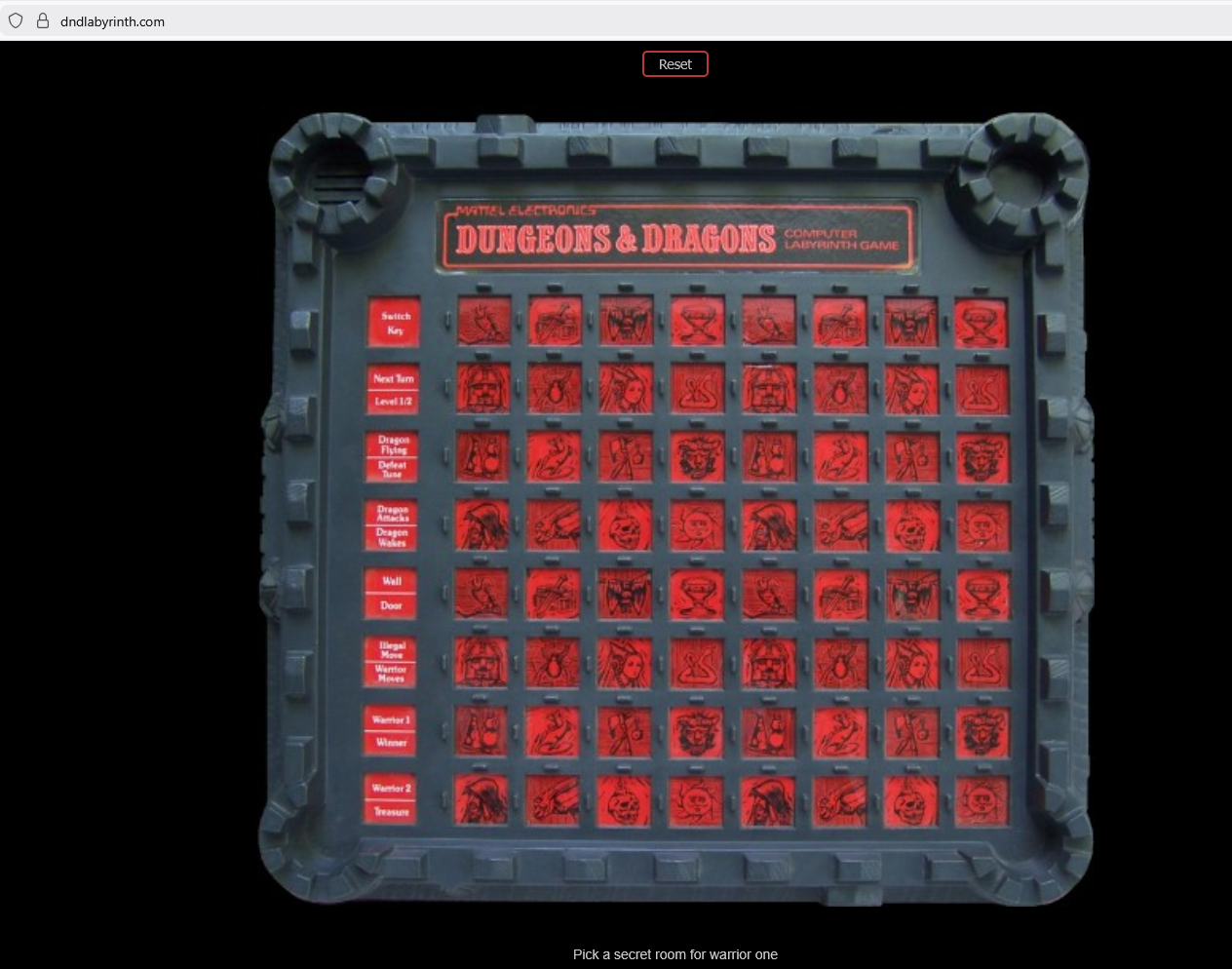
Dungeons & Dragons Computer Labyrinth Game (1980) – A Forgotten Digital Dungeon
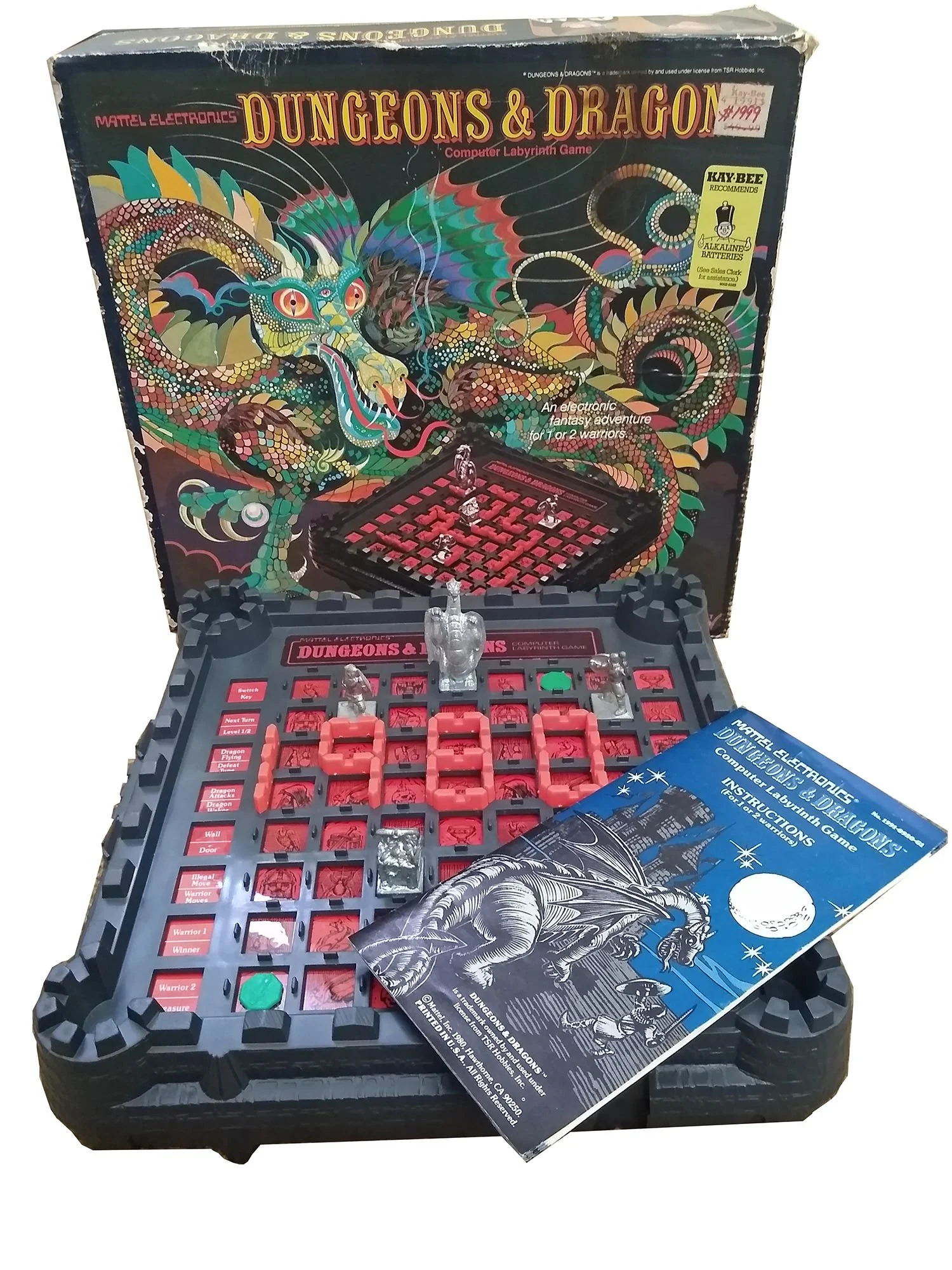
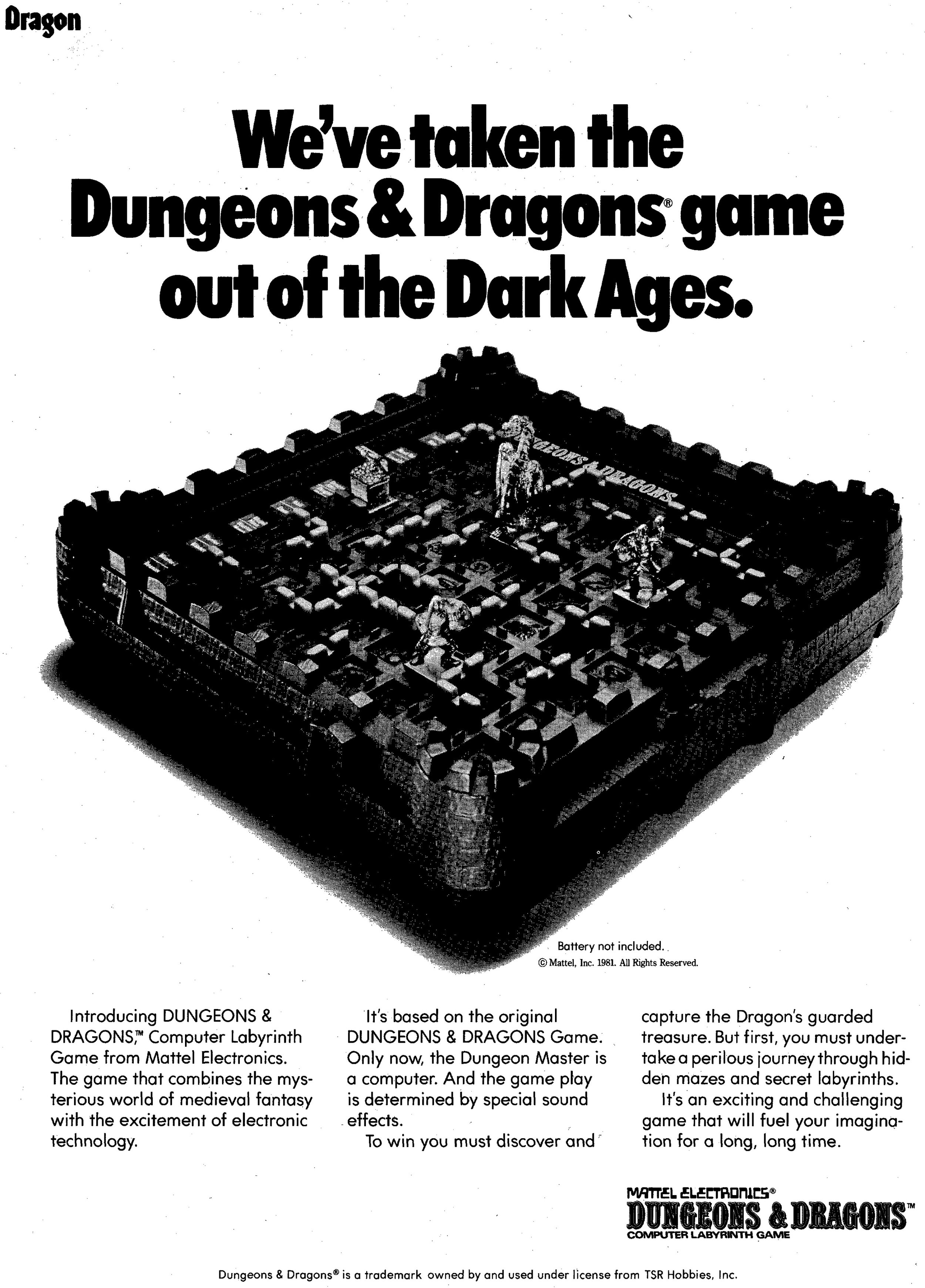
Long before apps, Wi-Fi, and virtual tabletops, there was something magical about a game that felt alive—and in 1980, Mattel delivered exactly that with the Dungeons & Dragons Computer Labyrinth Game.
🎲 A Dungeon You Couldn't See
What made this game so memorable wasn’t just the plastic castle aesthetic—it was the invisible labyrinth. Hidden beneath a touch-sensitive grid, the game generated a new dungeon every time you played. You weren’t just moving pieces—you were mapping the unknown, one sound at a time.
Every step triggered audio clues:
A dull tone? You hit a wall.
A different sound? A doorway.
A sudden alert? The dragon just woke up…
It turned deduction into survival.
🐉 The Dragon Knows Where You Are
The real star of the game was the unseen dragon. It slept at first, but once you got close to the treasure, it awoke—and began hunting.
What’s fascinating (especially looking back now) is that the dragon wasn’t random. It followed a predictable algorithm:
Moves one square per turn
Targets the closest player (or whoever holds the treasure)
Ignores walls, even moving diagonally
Once it attacked, the illusion broke—you could track it. Until then, it was pure tension.
⚔️ Strategy, Memory, and Mind Games
This wasn’t just a kids’ game—it required:
Spatial reasoning
Memory mapping
Risk management
Player vs. player tactics
With up to 8 squares of movement per turn, every decision mattered. Push your luck toward the treasure… or retreat before the dragon closes in?
🧠 Ahead of Its Time
Looking back, this game feels like a primitive roguelike:
Procedural generation
Fog of war
AI enemy behavior
All in a chunky plastic board with sound effects.
Not bad for 1980.

🔗 Play It Today
Huge thanks to @A_DungeonDelver for pointing out that you can actually experience this classic today via an online simulation:
If you’ve never tried it—or haven’t in decades—it’s absolutely worth a run through the dungeon.