“Fitness Adventure” Isn’t D&D — And That’s the Problem
So I’m scrolling Facebook the other day and I get hit with an ad for something called Fitness Adventure.

At first glance, it looks like it’s trying to speak my language:
dragons
quests
character cards
leveling up
Basically, it’s screaming, “Hey D&D player—this is for you.”
But the more I read, the more it became obvious:
This isn’t D&D-inspired gaming. This is marketing dressed up like D&D.
🧠 What It Actually Is (Once You Strip the Paint Off)
Let’s break it down.
According to the ad, Fitness Adventureis:
a printable board game
with a fantasy storyline (“Legends of Feylin: The Waking Dragon”)
where your real-world exercise advances the game
It leans heavily on:

“behavioral psychology”
“habit formation”
“tiny wins”
“identity shifts”
And look—I get it. That stuff has value.
But let’s call it what it is:
👉 This is a fitness motivation system, not a roleplaying game.
Even the ad basically says it outright:
“It’s like having a personal trainer, a game designer, and a motivational speaker all rolled into one.”
That’s not a DM.
That’s not a party.
That’s not a game.
💰 $67 for a Printable Game?!
Here’s where I really start raising an eyebrow.
This thing is priced at $67.
For:
downloadable PDFs
printable boards
character sheets
cards
And sure, they pad the value with things like:
“$263 total value”
bonus scroll cards
a “goblin quest”
But let’s be honest—this is still a print-it-yourself product.
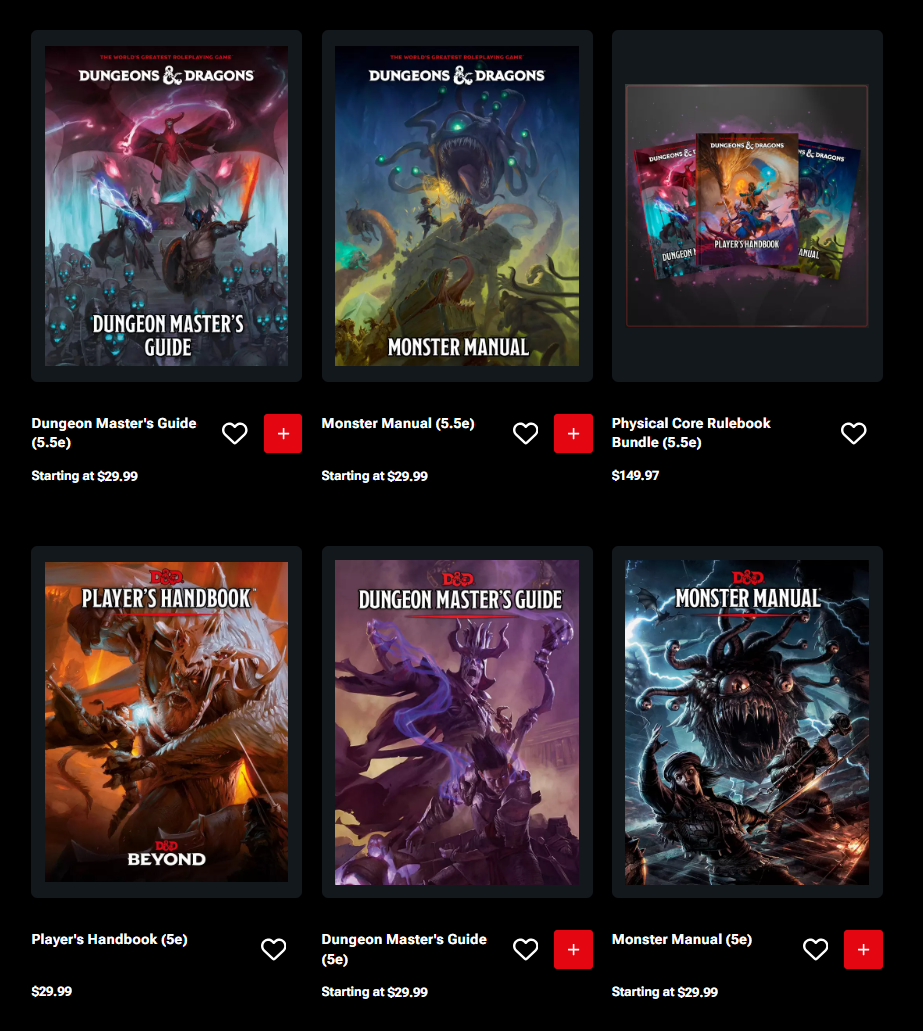
Meanwhile, for less (or about the same), you can get:
a full D&D sourcebook
a hardcover adventure
an entire indie RPG system
something with years of replayability and depth
This?
This is aguided habit system with fantasy flavoring.
🎭 It Misses What Makes D&D… D&D
Here’s the core issue:
Fitness Adventure fundamentally misunderstands why people love D&D.
D&D isn’t compelling because it has:
dragons
XP
quests
It’s compelling because it has:
shared storytelling
unpredictability
player agency
social chaos
Fitness Adventure replaces all of that with:
prewritten narrative
solo or loosely shared play
structured outcomes tied to real-life behavior
That’s not a tabletop RPG.
That’s a system of compliance wrapped in fantasy language.
🚨 And Let’s Be Real for a Second…
There’s also a subtle messaging issue here that bugs me.
The whole pitch leans into:
“you’ve failed at fitness before”
“you need this system”
“you just lack the right motivation structure”
Then it swoops in with:
👉 “We fixed it—with a dragon.”
That’s not gaming. That’s self-help marketing.
And when it borrows from D&D to do it, it cheapens the hobby.
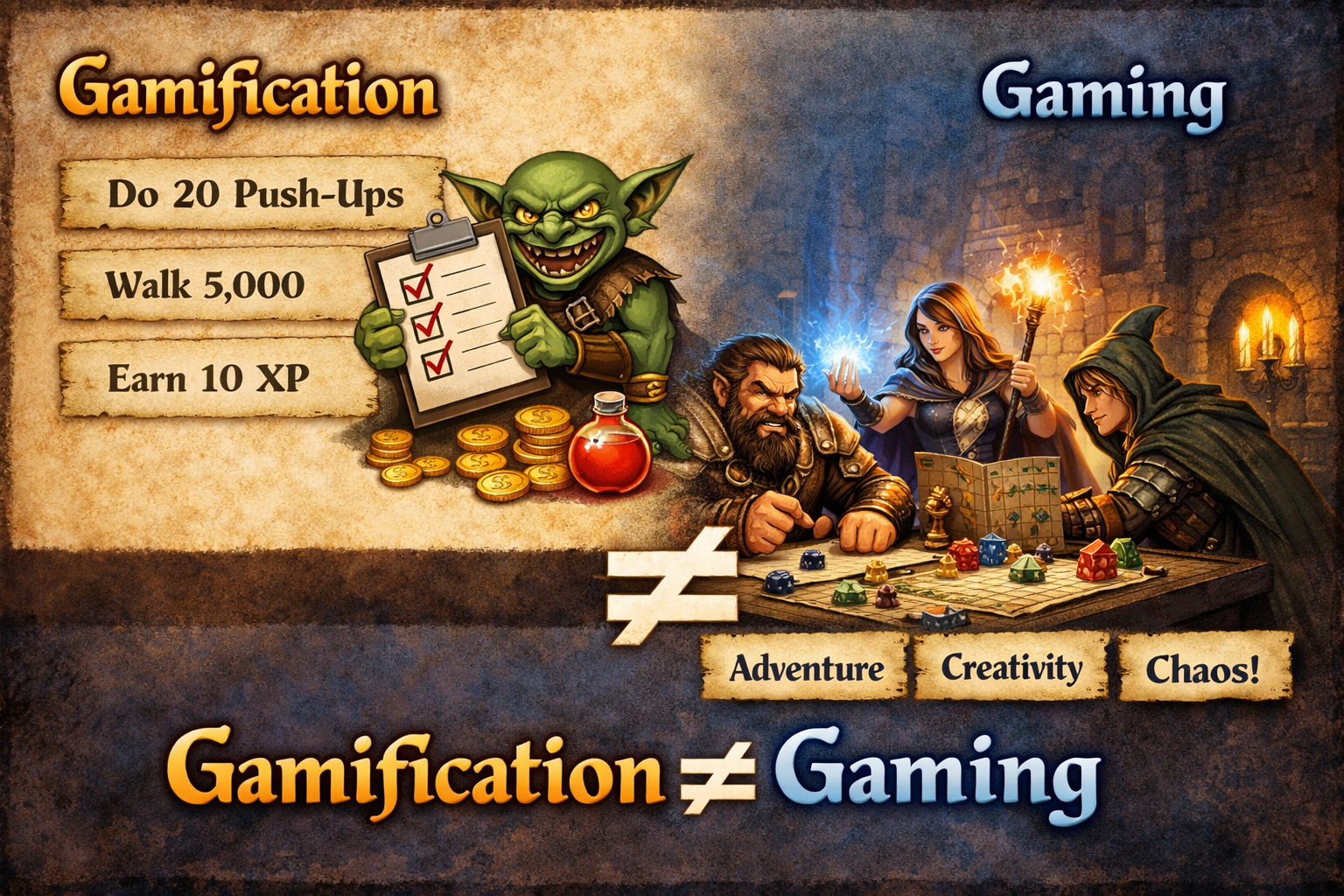
🧩 Gamification ≠ Gaming
This is the key distinction.
Gamification (what this is doing):
adds rewards and structure to real-life tasks
tries to make obligation feel like play
Gaming (what D&D actually is):
is the play
exists for its own sake
doesn’t need to justify itself with productivity
Fitness Adventure turns:
movement into obligation
obligation into “quests”
quests into a reward loop
But at the end of the day…
👉 You’re still just doing pushups so a PDF tells you that you hit a goblin.
🧙♂️ Your DM Is Not Your Therapist
And this ties into a bigger trend I’ve been seeing.
People trying to turn D&D into:
therapy
self-improvement frameworks
structured life systems
Let me say this clearly:
👉 Your DM is not your therapist.
👉 And your D&D game is not your self-help engine.
Fitness Adventure lives squarely in that space—it’s trying to turn the idea of roleplaying into a tool for fixing your real life.
But D&D doesn’t work because it fixes your life.
It works because it gives you a place to escape it for a while.
⚔️ Final Take
If Fitness Adventure helps someone get moving?
Great. Seriously.
But don’t sell it like it’s:
part of the tabletop hobby
aligned with D&D culture
or somehow equivalent to actual roleplaying games
Because it’s not.
It’s:
a fitness system
a motivational framework
wrapped in a dragon skin
and priced higher than many real RPG books
And as someone who actually plays, runs, and lives this hobby…
We can tell the difference.