Spending Your 7D How to Distribute Skill Dice in the WEG Star Wars RPG
One of the most enjoyable parts of creating a character in the Star Wars Roleplaying Game by West End Games is customizing your template with 7D of skill dice. These dice represent your character’s training, experience, and personal style within the galaxy far, far away.
Whether you're building a smuggler, a rebel pilot, or a streetwise information broker, how you distribute those dice will shape the way your character solves problems during the adventure.
Let’s take a closer look at how this works and some strategies for spending those precious dice.
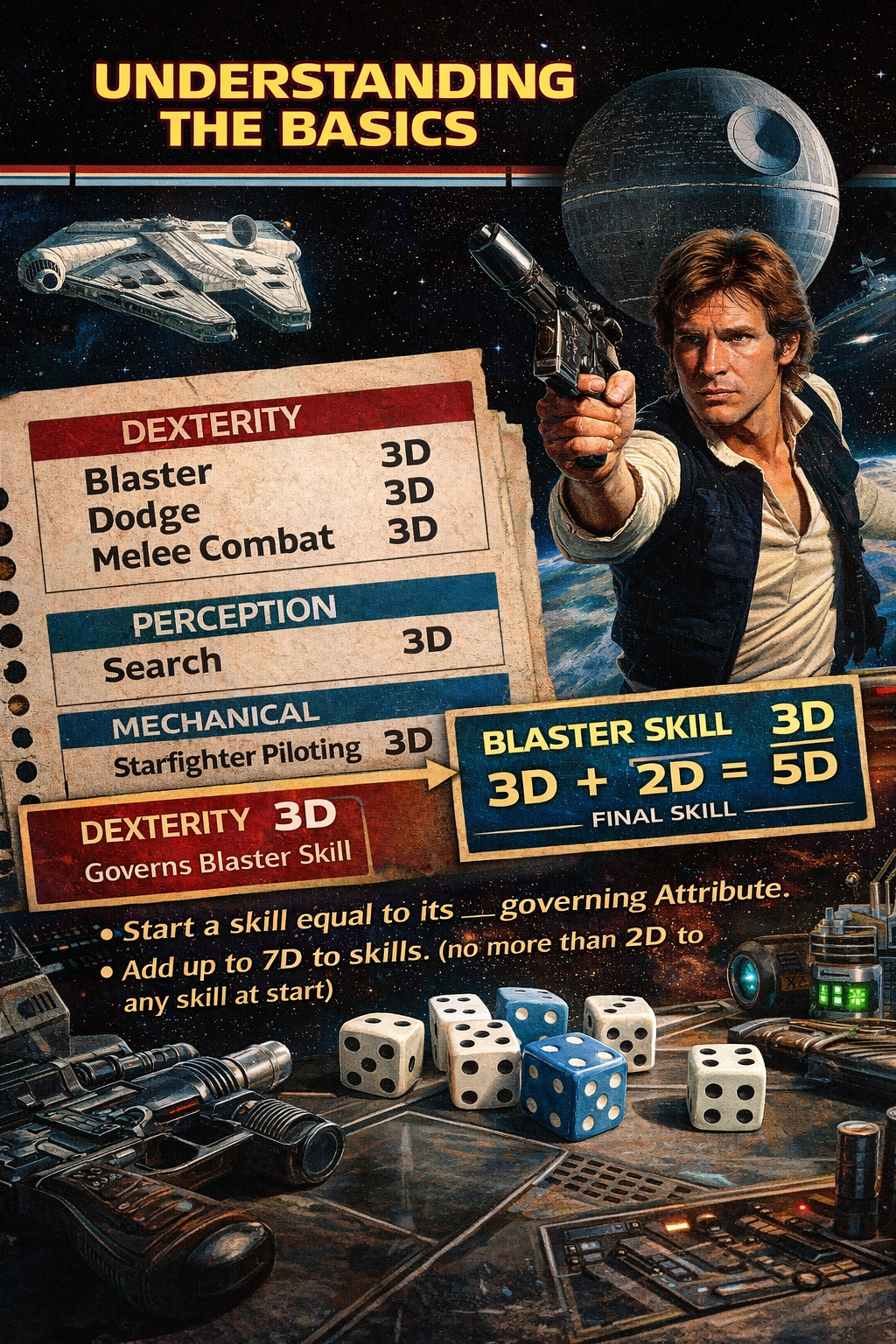
Understanding the Basics
In the WEG D6 system, characters have attributes such as Dexterity, Knowledge, Mechanical, Perception, Strength, and Technical. Each attribute governs a group of skills.
During character creation, you are given 7D to add to skills, not attributes. These dice represent additional training beyond your natural abilities.
When you place dice into a skill:
The skill must belong to the attribute listed on your template.
Each die increases your ability to succeed when rolling that skill.
Skills start at the same number of dice as their governing attribute.
For example:
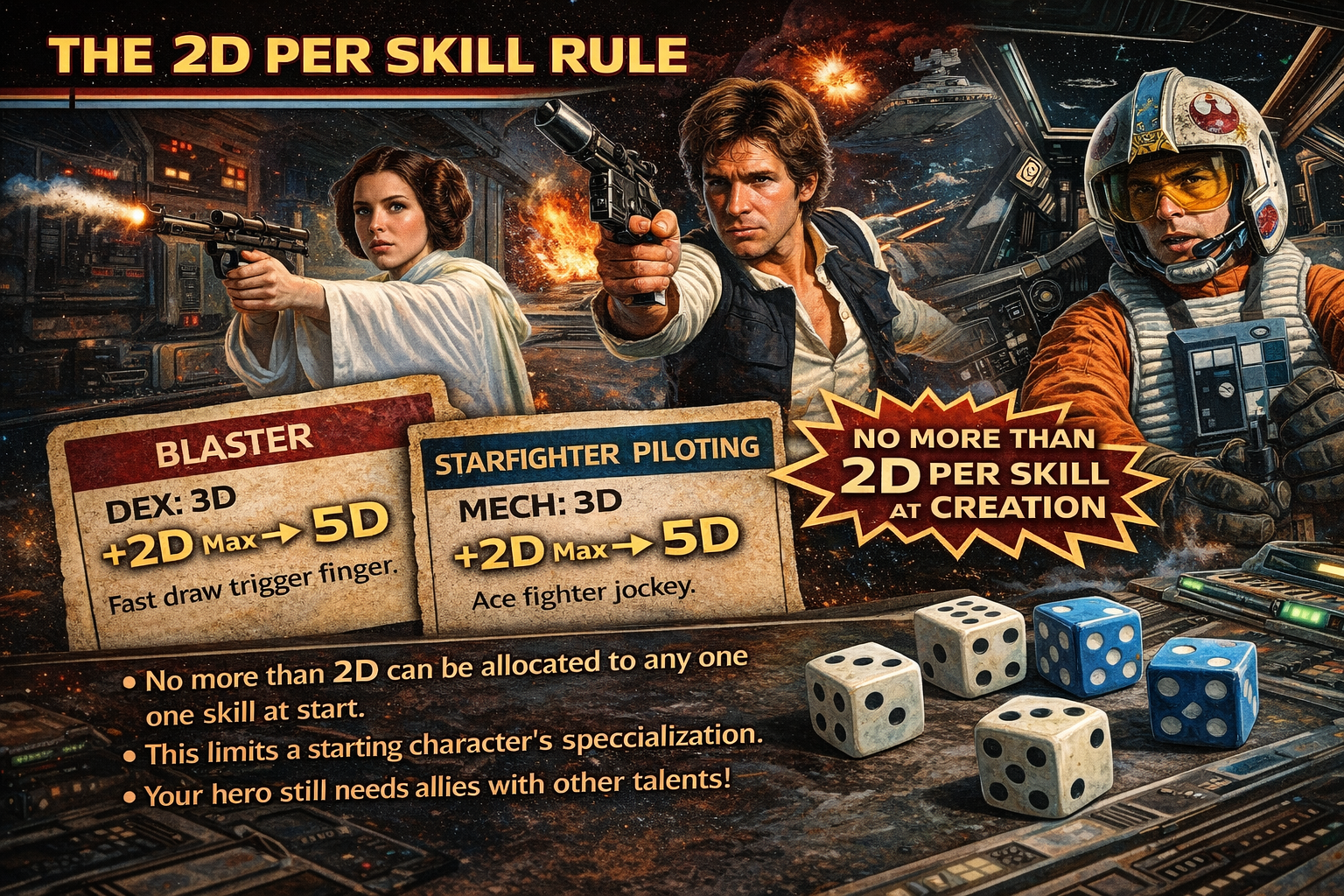
If your Dexterity is 3D, then your Blaster skill starts at 3D.
If you add 2D to Blaster, the final skill becomes 5D.
Simple, elegant, and very cinematic.
The 2D Per Skill Rule
One important restriction applies during character creation:
No more than 2D may be added to any single skill.
This rule prevents starting characters from becoming hyper-specialized and encourages well-rounded heroes—very much in the spirit of the films.
So while you may want to become the greatest blaster shot in the galaxy, the rules ensure you still need allies with other talents.
Example Distribution
Here’s a simple example for a Rebel operative who expects to see plenty of action:
Dexterity Skills
Blaster +2D
Dodge +1D
Perception Skills
Search +1D
Sneak +1D
Mechanical Skills
Repulsorlift Operation +1D
Technical Skills
Security +1D
Total spent: 7D
This character becomes competent in combat, stealth, and infiltration—perfect for missions behind Imperial lines.
Specializations
Players may also invest in specializations, which represent extremely focused expertise.
For example:
Blaster: Heavy Blaster Pistols
Starfighter Piloting: X-Wing
Bureaucracy: Imperial Permits
Specializations cost half as much to improve later in the game, making them an attractive option for characters who want a distinctive niche.
However, during character creation it’s usually wiser to build a strong foundation of general skills first.
Character Concept First, Dice Second
The best advice when distributing your 7D is simple:
Think about your character before you think about numbers.
Ask yourself:
What did they do before joining the Rebellion?
What are they known for?
How do they survive in a dangerous galaxy?
A smuggler might invest heavily in piloting and streetwise, while a former Imperial technician might focus on security, repair, and slicing.
Your dice should tell your character’s story.
Balanced vs Specialized Characters
Players generally fall into two camps when allocating their dice.
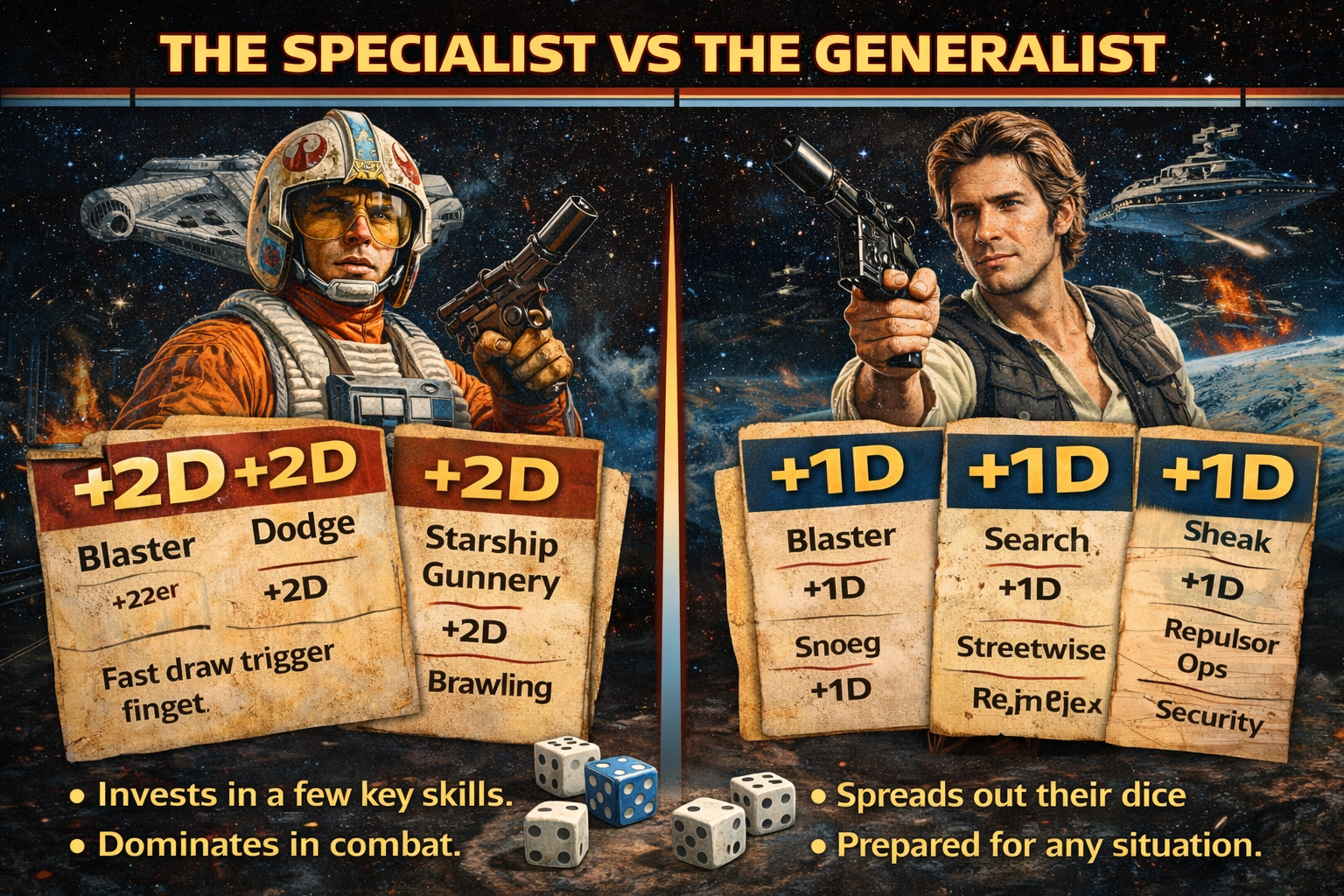
The Specialist
This player invests heavily into a few key skills.
Example:
Blaster +2D
Dodge +2D
Starship Gunnery +2D
Brawling +1D
This creates a deadly combatant who shines in firefights.
The Generalist
This player spreads their dice across many different skills.
Example:
Blaster +1D
Dodge +1D
Search +1D
Sneak +1D
Streetwise +1D
Repulsorlift Operation +1D
Security +1D
This character may not dominate in any single area but is capable of handling many different situations.
Both approaches work beautifully depending on your group.
Team Composition Matters
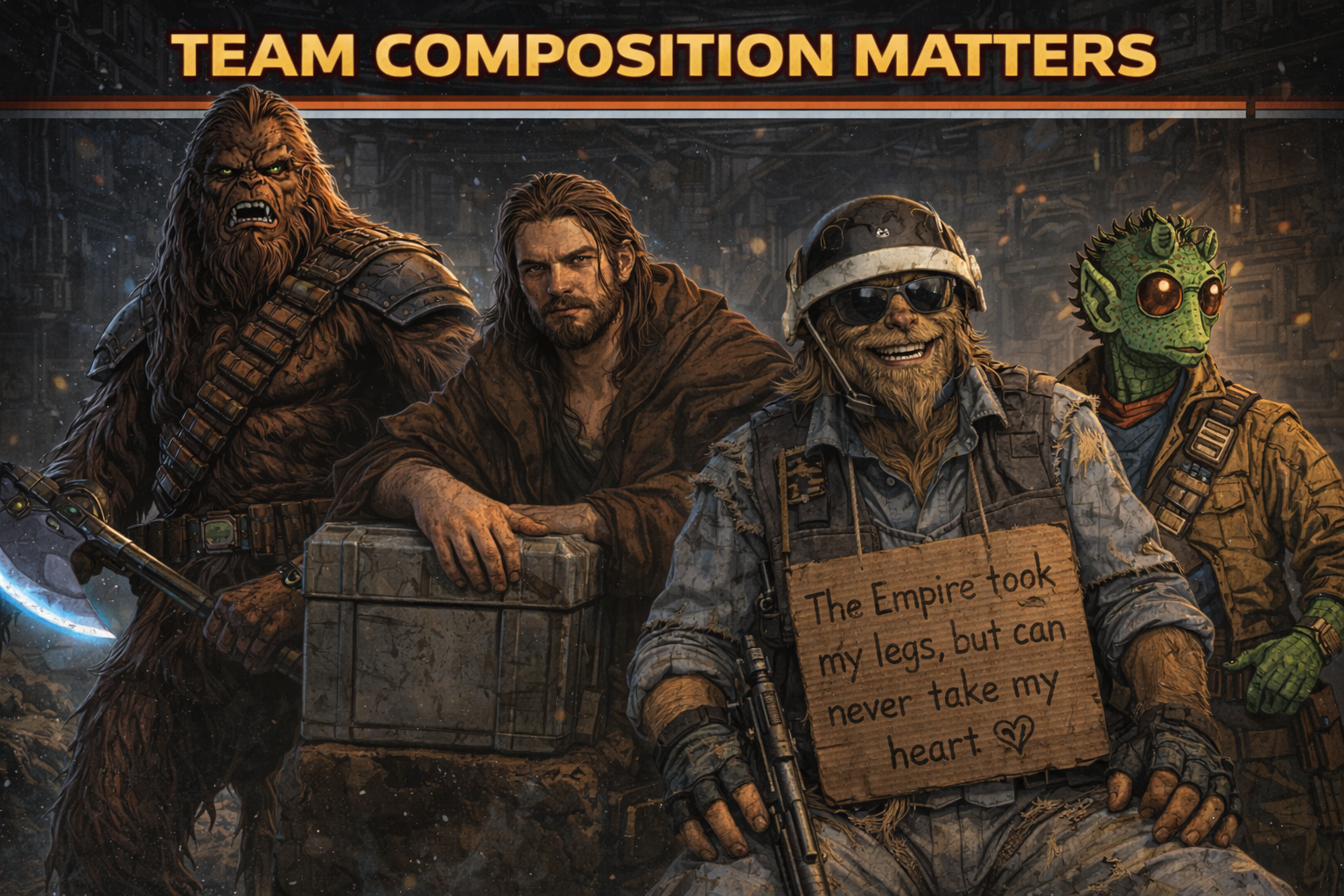
The Star Wars RPG shines when a group of characters covers different specialties.
Think of the classic trio:
Han Solo – Pilot and blaster expert
Leia Organa – Diplomat and strategist
Luke Skywalker – Force-sensitive hero
Each brings something different to the table.
When distributing your 7D, consider what the rest of the party is good at. Filling gaps in the team can make your character invaluable.
Final Thoughts
Your 7D of skill dice represents who your character is at the start of their journey.
They are not the finished hero.
The galaxy will shape them through adventures, narrow escapes, and hard-earned experience.
Spend those dice wisely—but more importantly, spend them in a way that makes your character fun to play.
Because in the end, the best characters in the Star Wars universe weren’t built to optimize dice pools.
They were built to tell great stories.
And the dice simply helped the story unfold.
COMING Soon to The Mystic Syndicate