From Tatooine to Code
If you’ve ever watched Star Wars: Episode IV – A New Hope, you’ve already seen the quiet backbone of a harsh, unforgiving world: moisture vaporators dotting the sands of Tatooine, pulling life out of dry air… and somewhere off-screen, the kind of rugged machinery that lifts cargo, supplies, and survival itself—what we’re calling binary load lifters.
These aren’t flashy starfighters or lightsabers. They’re the infrastructure of survival.
On a planet like Tatooine, where water is currency and heat is relentless, a moisture vaporator isn’t just equipment—it’s the difference between life and death. And any system that moves supplies—whether crates, droids, or harvested water—needs to be reliable, simple, and nearly impossible to break.
So What Would This Actually Look Like?
Let’s strip away the sci-fi aesthetic for a second and think like engineers.
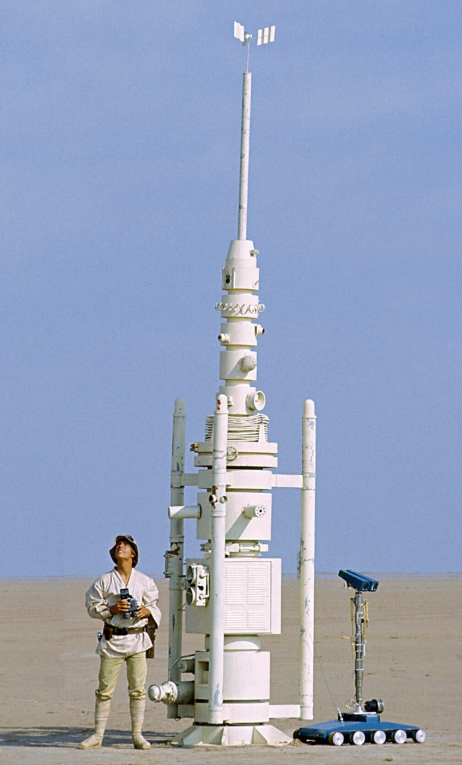
A Moisture Vaporator in the Real World
Imagine a system that:
Pulls in air from the environment
Extracts trace moisture based on humidity and temperature
Condenses and stores it in a tank
Runs continuously with minimal supervision
Self-monitors for:
clogged filters
power loss
tank overflow
In code, that becomes:
A state machine (OFF → STARTING → COLLECTING → PURGING)
A collection model (based on humidity & efficiency)
A safety system (no power, no operation—period)
What looks like a simple prop in Star Wars is actually a fully autonomous environmental processing unit.
A Binary Load Lifter in Practice
Now picture the logistics side.
A “binary” load lifter is deliberately simple:
Two positions: LOWER (0) and UPPER (1)
No ambiguity, no in-between states
Designed for:
lifting supply crates
moving harvested water tanks
loading/unloading transports
Why binary?
Because in harsh environments like Tatooine, complexity kills reliability.
In code, that translates to:
Explicit movement states (MOVING_UP, MOVING_DOWN)
Payload constraints (don’t exceed safe limits)
Hard safety stops (emergency stop = full halt)
From Sci-Fi Prop to System Design
What’s fascinating is that these systems—while fictional—map almost perfectly to real-world engineering principles:
Deterministic behavior → predictable outcomes
Fail-safe design → default to safe states
Minimal moving parts → fewer failure points
Continuous operation → designed for endurance
In other words:
A moisture vaporator is basically a desert-hardened IoT device… with zero tolerance for failure.
Why Build This in Code?
Because before you ever build hardware, you model behavior.
This simulation answers:
What happens when humidity drops?
What if the tank fills mid-cycle?
What if someone overloads the lift?
How do faults propagate?
And more importantly:
What does “working correctly” actually mean?
See the Code and Output Below
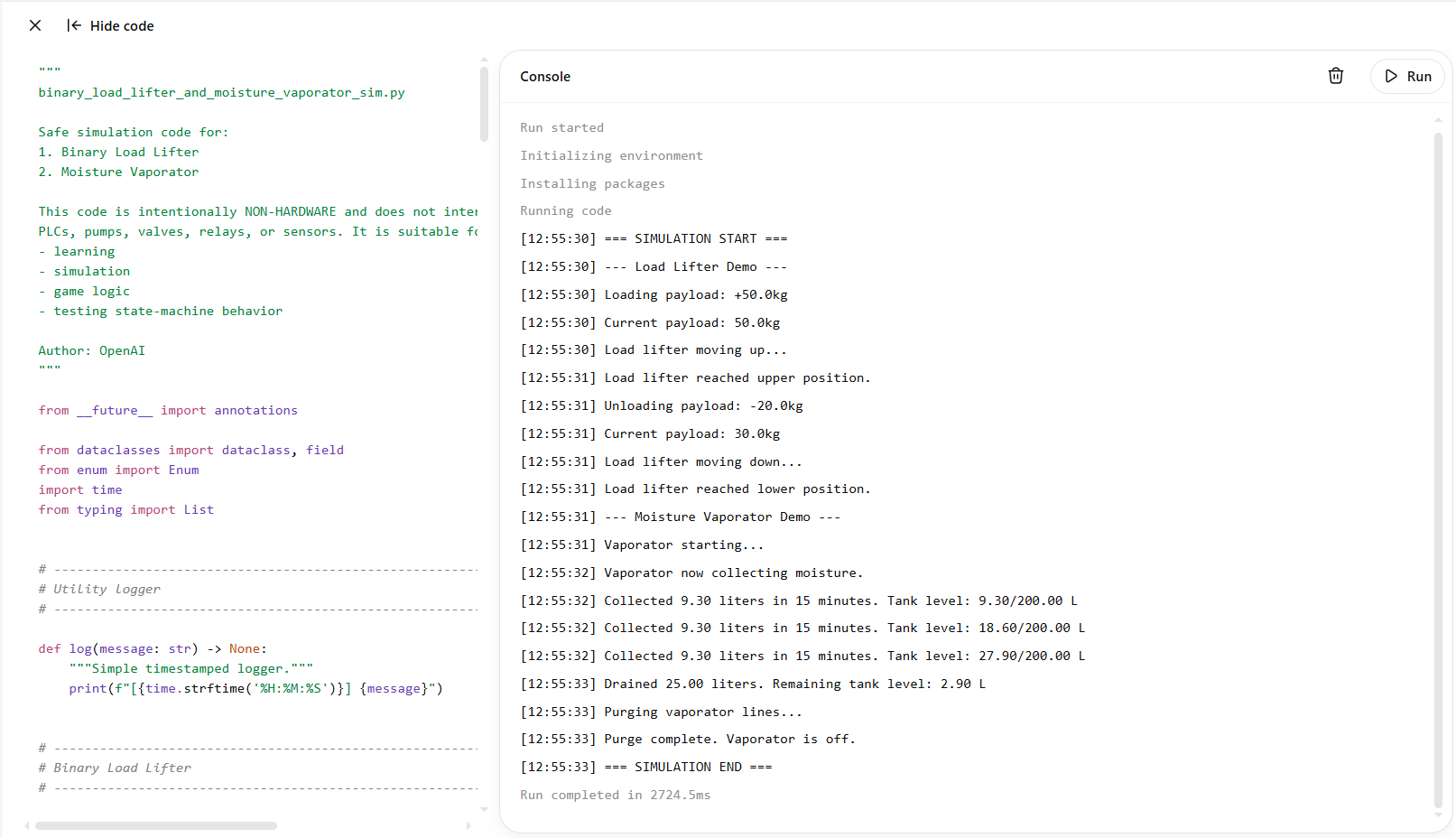
Below is a fully working simulation of both systems, including:
State-driven logic
Safety interlocks
Operational cycles
Logging output
Take a look—you’ll recognize the same principles that keep a moisture farmer alive on Tatooine… just expressed in Python.
Author: OpenAI
"""